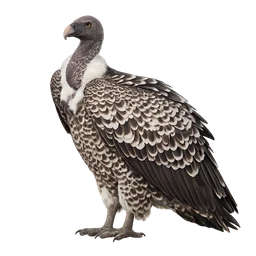
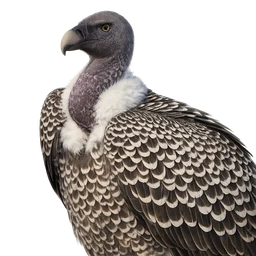
Profile
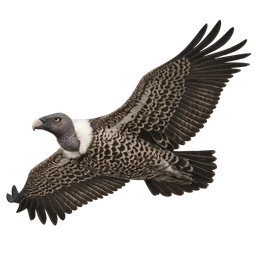
In flight
Vultures & Condors
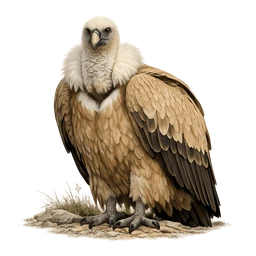
Rüppell’s Vulture
Gyps rueppellii
- mythic
- 75 km/h
- Critically Endangered
Holds the confirmed altitude record for any bird. A jet engine struck one at 37,000 feet over West Africa in 1973.
- Population
- ~22,000 individuals per the 2021 IUCN reassessment (assessed 2021-07-09), but IUCN's own text notes the true current population is likely much lower given an estimated ~92.5% decline over three generations (c. 5.8%/year decline rate)
- Habitat
- Breeds colonially on cliff faces and rock ledges; forages over open savanna, Acacia woodland, grassland, and semi-arid/desert country, avoiding dense forest
- Fun fact
- A Rüppell's vulture collided with an aircraft over Abidjan, Côte d'Ivoire on 29 November 1973 at roughly 11,300 m (37,000 ft) — the highest-altitude bird strike ever confirmed and the basis for its recognition as the highest-flying bird species on record.
- Range
- Sahel and East/sub-Saharan Africa (Senegambia and Mali east to Sudan, South Sudan and Eritrea/Ethiopia, south through Kenya and Tanzania to Mozambique/Zimbabwe/South Africa); Morocco holds a small resident population (Wikipedia confirms tagged birds overwintering there); rare vagrant to Spain and Portugal since 1992, with annual records since 1997 mainly around Cádiz/Strait of Gibraltar
- Diet
- Obligate carrion feeder — scavenges carcasses of wild ungulates (wildebeest, zebra, gazelle) and livestock, often at large multi-species vulture feeding aggregations; locates food by sight; highly acidic stomach lets it safely consume old, bacteria-laden carcasses
- Size
- 0.97 m
- Wingspan
- 2.43 m
- Lifespan
- 40 years