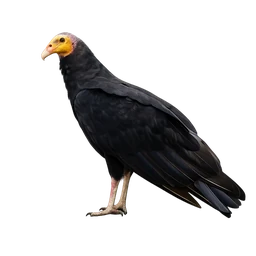
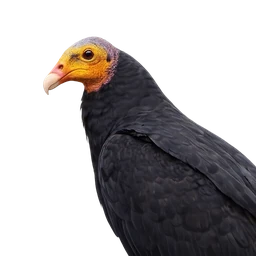
Profile
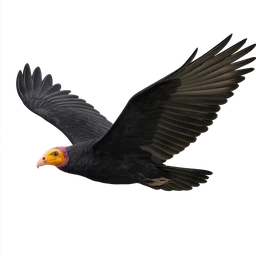
In flight
Vultures & Condors
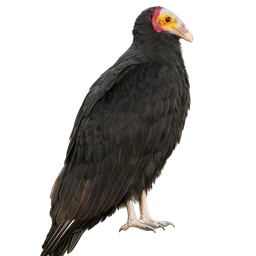
Greater Yellow-headed Vulture
Cathartes melambrotus
- uncommon
- 65 km/h
- Least Concern
Finds hidden carcasses under closed canopy by smell alone. In Amazon forests, no other vulture reaches the feast first.
- Population
- 100,000–1,000,000 individuals (global estimate; precise mature-individual count not published; population trend decreasing)
- Habitat
- Undisturbed lowland tropical moist forest of the Amazon Basin and the Guianas, from sea level up to about 1,400-1,410 m; also forest swamps and forest-pasture/fragmented-forest edges; rarely strays far from continuous forest canopy
- Fun fact
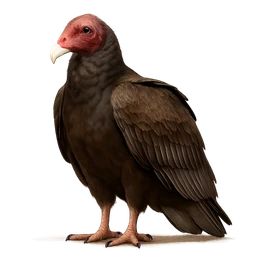
- Like its relative the Turkey Vulture, the Greater Yellow-headed Vulture has an unusually keen sense of smell and can detect ethyl mercaptan, a gas produced early in carcass decay, allowing it to find carrion hidden beneath dense rainforest canopy that purely sight-hunting scavengers would miss.
- Range
- Amazonia and the Guiana Shield: southeastern Colombia, southern/eastern Venezuela, Guyana, Suriname, French Guiana, northern/western Brazil, eastern Ecuador, eastern Peru, and northern Bolivia; non-migratory resident
- Diet
- Obligate carrion scavenger; feeds mainly on recently dead small-to-medium mammals (sloths, monkeys, opossums, armadillos, rodents, under ~5 kg) and occasionally snakes and fish, located largely by smell (detects ethyl mercaptan produced early in carcass decay)
- Size
- 0.75 m
- Wingspan
- 1.72 m
- Lifespan
- 8 years