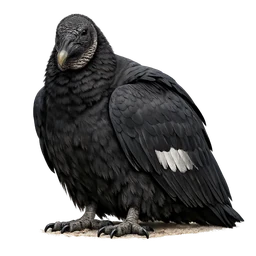
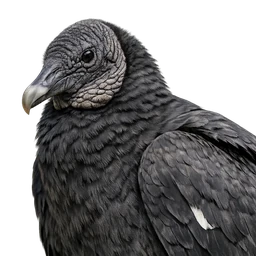
Profile
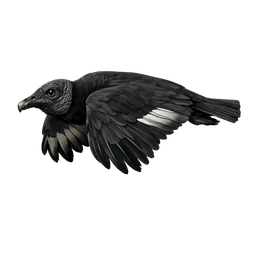
In flight
Vultures & Condors
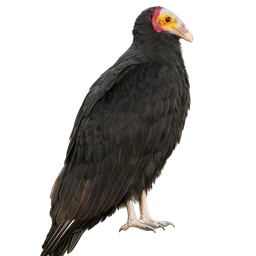
Black Vulture
Coragyps atratus
- uncommon
- 50 km/h
- Least Concern
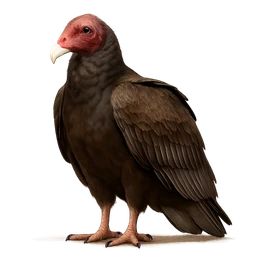
Lacks a turkey vulture's nose, so it follows them to food instead. Makes up for it with aggression and numbers at the feast.
- Population
- Very large and likely underestimated by regional surveys; BirdLife/IUCN DataZone (direct factsheet fetch, confirmed) cites 50,000,000-99,900,000 mature individuals globally with trend unknown (assessment covers <50% of global range); Partners in Flight/Cornell instead estimate ~190 million total individuals; North American Breeding Bird Survey shows ~3.4%/year increase 1966-2019 with range expanding north/east — figures not reconciled across sources but both corroborated independently
- Habitat
- Open country and land interspersed with woods or brush; also moist lowland forests, shrublands, grasslands, wetlands, swamps, pastures, deserts, and degraded former forest, from sea level to ~4,790 m elevation; frequents areas near human habitation, landfills, and roadsides for carrion
- Fun fact
- Black Vultures lack a syrinx (the vocal organ in birds), so instead of songs or calls they can only produce hisses and low grunts.
- Range
- Resident and migratory from the southeastern/south-central United States (expanding into the Midwest and Northeast) south through Mexico and Central America to Peru, central Chile, Uruguay, and much of South America; extent of occurrence estimated at ~44.3 million km2 (BirdLife DataZone); range has been expanding northward and eastward in North America in recent decades
- Diet
- Primarily carrion (located largely by sight and by following other vultures, since Black Vultures have a poor sense of smell relative to Turkey Vultures); also eats eggs, small live reptiles, small mammals/birds, newborn livestock, garbage, and some fruit; occasionally preys on weakened or newborn animals, making it the only New World vulture known to actively hunt/attack live prey with any regularity
- Size
- 0.64 m
- Wingspan
- 1.5 m
- Lifespan
- 25.5 years