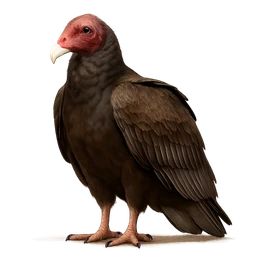
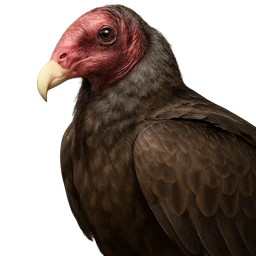
Profile
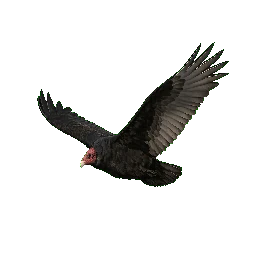
In flight
Vultures & Condors
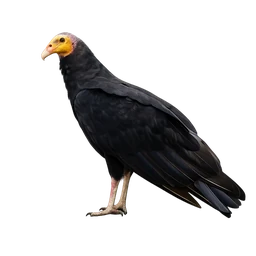
Turkey Vulture
Cathartes aura
- uncommon
- 64 km/h
- Least Concern
Soars for hours without flapping. Finds your recipient by smell. Don't ask what else it smells.
- Population
- ~18 million mature/total individuals (widely cited Partners in Flight / BirdLife-derived estimate); population stable to increasing across most of its range
- Habitat
- Open and semi-open country — subtropical/tropical forest edges, grasslands, shrublands, deserts, wetlands, pastures, farmland, and foothills where woodland borders open terrain; rides thermals off varied topography and generally avoids unbroken dense forest.
- Fun fact
- Turkey Vultures have an exceptionally acute sense of smell for a bird — they can detect the ethyl mercaptan gas released by decaying carcasses hidden under forest canopy, a trait so reliable that gas/pipeline companies have used it to locate leaks by watching for circling vultures.
- Range
- Throughout the Americas — from southern Canada south through the United States, Mexico, and Central America to the southernmost tip of South America (Cape Horn), including the Greater Antilles; the most widely distributed New World vulture
- Diet
- Almost exclusively carrion, from small mammals to large ungulates, located largely by an exceptionally acute sense of smell (detecting ethyl mercaptan from early-stage decay) combined with sight; occasionally supplements with some plant matter, insects, and amphibians.
- Size
- 0.72 m
- Lifespan
- 16 years