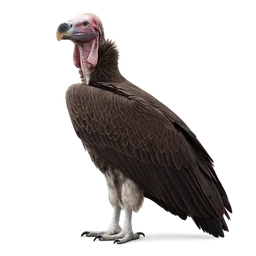
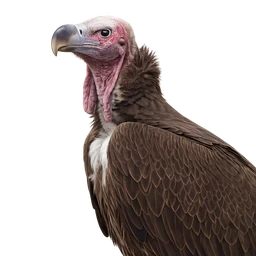
Profile
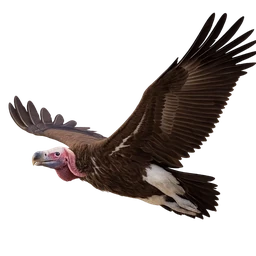
In flight
Vultures & Condors
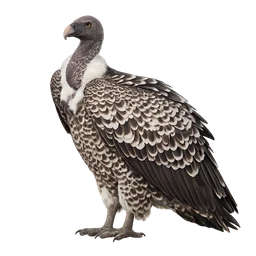
Lappet-faced Vulture
Torgos tracheliotos
- epic
- 72 km/h
- Endangered
Africa's most dominant vulture. Its massive bill can tear hide that other vultures can't breach.
- Population
- ~6,500 mature individuals (1992 estimate baseline, likely an overestimate per BirdLife's 2021 reassessment); population is undergoing a "very rapid" decline — roughly 80% decrease across Africa over three generations (~45 years), consistent with an annualized decline on the order of 3-4%/year
- Habitat
- Dry savanna, thornbush, semi-desert and arid plains, and open country/mountain slopes with scattered trees and minimal grass cover; occurs from near sea level up to roughly 4,500 m elevation
- Fun fact
- The Lappet-faced Vulture is the sole living member of its genus, Torgos, and its powerful hooked bill lets it tear open carcass hides too tough for most other African vultures to breach, often letting it feed first and giving smaller vulture species access to a kill.
- Range
- Patchily distributed across sub-Saharan Africa from Senegal/Mauritania to South Africa (and Eswatini), with small, fragmented, largely extirpated remnant populations on the Arabian Peninsula (Yemen, Oman, Saudi Arabia, UAE) and formerly parts of the Middle East/North Africa
- Diet
- Obligate scavenger of carrion, especially from large mammals (including elephant carcasses); its powerful bill lets it tear open tough hide that most other African vultures cannot breach, and it occasionally takes freshly killed or live smaller prey such as young antelope calves, other small mammals, birds, reptiles, and flamingo chicks
- Size
- 1.05 m
- Wingspan
- 2.7 m
- Lifespan
- 40 years