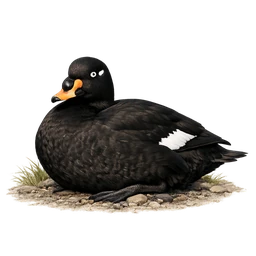
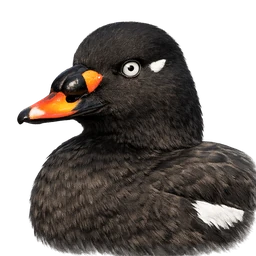
Profile
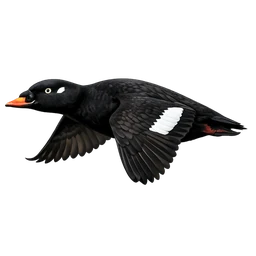
In flight
Waterfowl
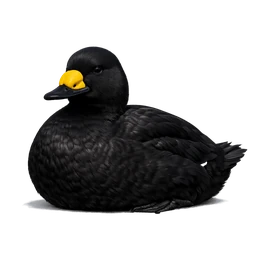
White-winged Scoter
Melanitta deglandi
- uncommon
- 40 km/h
- Least Concern
Largest scoter, with a flashing white wing patch in flight. Dives for mussels in cold coastal water.
- Population
- No reliable global total population figure exists (remoteness of boreal breeding areas hampers surveys); population is described as widespread but decreasing (BirdLife International/IUCN, 2018 assessment)
- Habitat
- Breeds on wooded coastlines, small freshwater lakes, pools and rivers within northern boreal/coniferous forest and taiga (often near rocky islands with herbaceous cover); winters mainly at sea in shallow inshore coastal waters, estuaries and inlets with mussel beds, occasionally diving to 30-40 m
- Fun fact
- Male White-winged Scoters do not acquire their fully glossy black adult plumage, orange-red knobbed bill, and white eye patch until about three years of age.
- Range
- North America (largest breeding range of any North American scoter): breeds from Alaska across western/interior Canada, less commonly east toward Hudson Bay and south to the Canadian Prairies; winters along the Pacific coast, the Great Lakes, and the Atlantic/southern Canadian coasts; casual vagrant to Europe (Scotland, Ireland, Iceland, Norway) with locally reported records further afield (Bermuda, Greenland) in some range compilations, though these edge-of-range claims are less consistently corroborated than the core range
- Diet
- Benthic diver; feeds on amphipods and aquatic insects on freshwater breeding grounds, shifting to mollusks (clams, mussels) and crustaceans in marine wintering waters, with herring spawn reported seasonally along western coasts. A heavily muscled gizzard lets it crush hard-shelled prey whole.
- Size
- 0.55 m
- Wingspan
- 0.8 m
- Lifespan
- 12 years