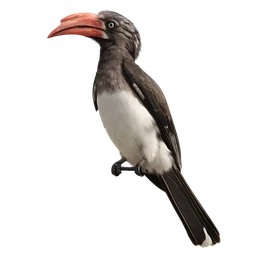
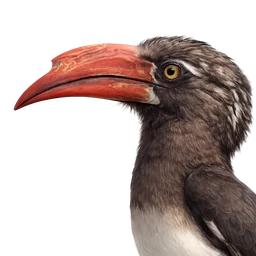
Profile
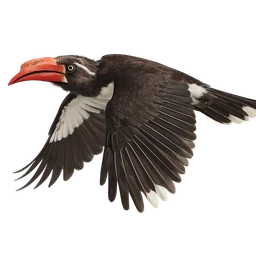
In flight
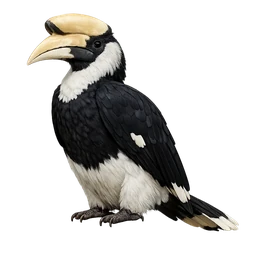
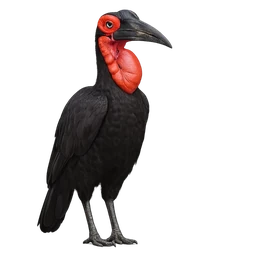
Hornbills
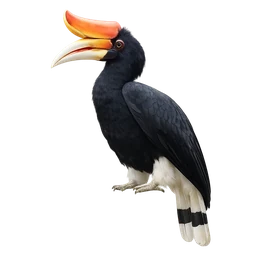
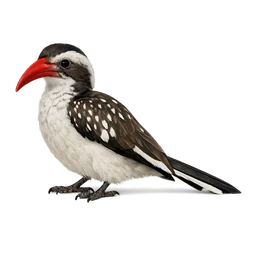
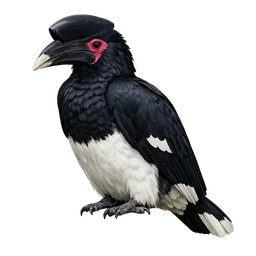
Crowned Hornbill
Lophoceros alboterminatus
- uncommon
- 43 km/h
- Least Concern
Seals mate inside a cavity with mud. The male feeds her through a slit. She breaks out when chicks are half-grown.
- Population
- Unquantified; BirdLife DataZone/IUCN describe it as widespread and locally common in suitable habitat, with a decreasing population trend attributed to habitat loss — no numeric global population figure published
- Habitat
- Coastal and riverine forest, forest edge, and lightly wooded savanna/woodland with thicker forest patches; also occurs in open fields and enters urban gardens near forest patches
- Fun fact
- Males and females look similar overall, but the male has a noticeably larger, redder casque atop the bill than the female (whose casque is smaller and bill base yellower) — one of the clearest visual ways to sex this species in the field.
- Range
- Sub-Saharan Africa: SW Ethiopia, S Somalia, and NE DR Congo (Zaire) south through South Sudan, Sudan, Uganda, Kenya, Rwanda, Burundi, Tanzania, Malawi, Zambia, and Angola to NE Namibia, Zimbabwe, Eswatini, Mozambique, and eastern South Africa (18 countries/territories; extent of occurrence ~9,970,000 km2 per BirdLife DataZone)
- Diet
- Omnivorous/insectivorous: mainly arthropods (grasshoppers, hairy and hairless caterpillars, termites, wasps, moths, beetles), also small reptiles (including chameleons/lizards), small rodents, golden moles, snails, birds' eggs, small birds, and fruit/seeds (including cultivated crops such as oil palm, peanuts, maize, and bananas in the dry season)
- Size
- 0.52 m