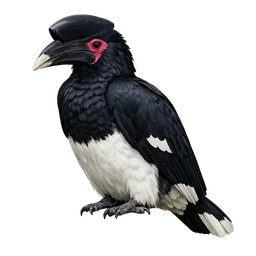
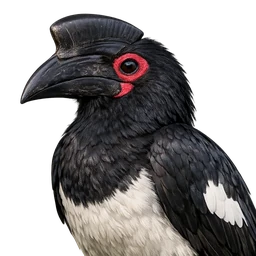
Profile
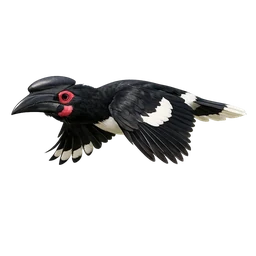
In flight
Hornbills
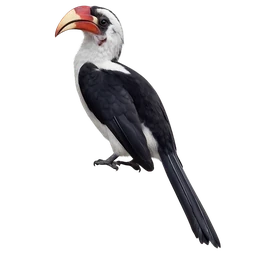
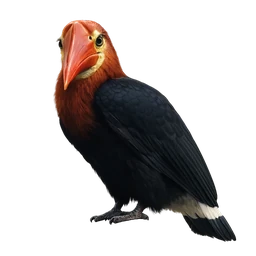
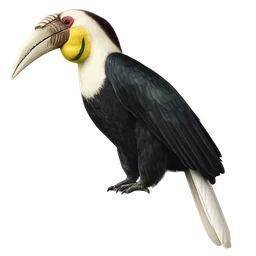
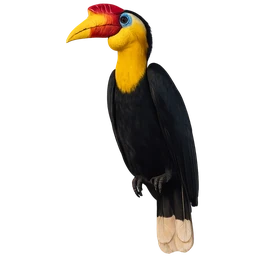
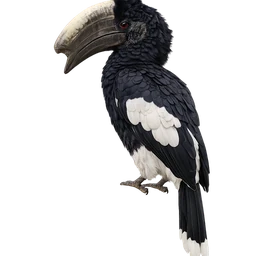
Trumpeter Hornbill
Bycanistes bucinator
- epic
- 43 km/h
- Least Concern
Its wailing cry sounds exactly like a human infant. Forests across East Africa go from quiet to alarming in seconds.
- Population
- Unknown/not quantified globally; BirdLife describes it as thinly distributed but locally common across a very large range (~6,520,000 km² extent of occurrence), with a decreasing population trend
- Habitat
- Subtropical/tropical moist lowland and montane forest, warm evergreen forests (especially coastal and riverine forests), dry forest, deciduous woodland and wooded hillsides, plus dry savanna at forest edges; occurs from sea level up to about 2,200 m elevation
- Fun fact
- The Trumpeter Hornbill gets its name from its loud, wailing, trumpet-like call ("waaah...waaah...") that closely resembles a crying child, and carries far across the African forest canopy; females also seal themselves into tree-cavity nests for roughly 90-95 days while incubating and raising chicks, molting their flight feathers during confinement.
- Range
- Eastern and southern Africa across 13 countries: Angola, Botswana, Burundi, Democratic Republic of Congo, Eswatini, Kenya, Malawi, Mozambique, Namibia (Caprivi Strip), South Africa (east), Tanzania, Zambia, and Zimbabwe; non-migratory resident throughout
- Diet
- Omnivorous — mainly fruit (especially figs and Trichilia species), plus large insects, crabs, millipedes, small reptiles, small mammals, small birds, and eggs/nestlings
- Size
- 0.615 m
- Lifespan
- 20 years