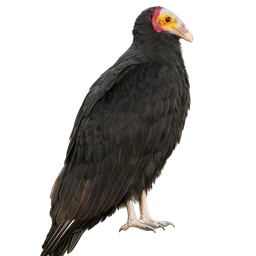
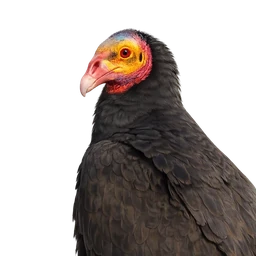
Profile
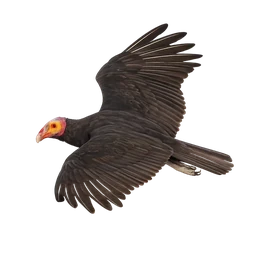
In flight
Vultures & Condors
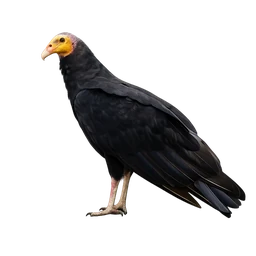
Lesser Yellow-headed Vulture
Cathartes burrovianus
- uncommon
- 65 km/h
- Least Concern
Hunts by smell over open savannas, a rare talent in birds. That vivid yellow head is doing absolutely nothing aerodynamic.
- Population
- 100,000–1,000,000 mature individuals (stable trend)
- Habitat
- Open, seasonally wet or flooded subtropical/tropical lowlands — savanna, grassland, marshes, swamps, mangroves, and heavily degraded former forest; widespread in open country, unlike the closely related Greater Yellow-headed Vulture which stays confined to unbroken forest (mainly Amazon Basin)
- Fun fact
- Like other New World vultures it lacks a syrinx and can only hiss or grunt (no true song), and it cools itself via urohidrosis — voiding waste onto its own legs to lower body temperature by evaporation.
- Range
- Eastern Mexico south through Central America, and patchily through South America east of the Andes, south to Uruguay/Argentina
- Diet
- Carrion, located mainly by smell (an ability uncommon among birds, tied to detecting ethyl mercaptan, a decay gas); also opportunistically takes small aquatic animals and invertebrates; depends on larger vultures (e.g., King Vulture) to open tough hides it cannot pierce itself
- Size
- 0.58 m
- Wingspan
- 1.57 m
- Lifespan
- 16 years